
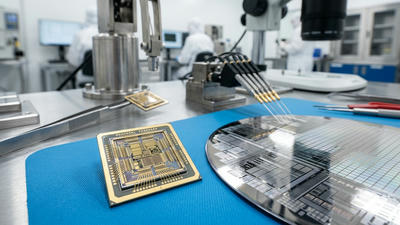
ASIC vs. GPU in 2026: Broadcom’s Custom Silicon Order Book Reveals the Shift
The AI chip market is becoming more diverse, not simply replacing one processor with another. GPUs remain valuable for programmable computing, while large customers increasingly commission custom accelerators that reflect their own workloads, infrastructure, and economics.



Macro Cycle

Alphabet’s Negative Free Cash Flow and AI CapEx Surge: The Semiconductor Spending Paradox
Alphabet’s negative quarterly free cash flow is not evidence that its operating business stopped generating money. It is evidence that infrastructure investment overtook that cash generation. For semiconductor suppliers, the same spending that squeezes Alphabet’s near-term cash flow can create substantial revenue opportunities.
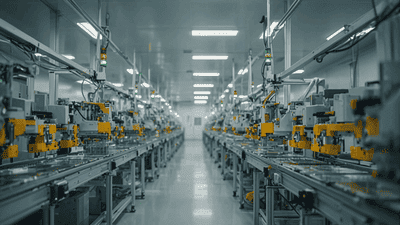
Yongding’s $1.13B Laser Chip Orders: The Hidden Supply Chain Behind AI Infrastructure
The most important correction comes before the investment thesis: Yongding’s disclosed laser-chip orders total approximately RMB 1.133 billion, not US$1.13 billion. The July 29, 2026 announcement identified a RMB 542 million order and a US$87 million order, translated at approximately RMB 591 million. Both amounts included tax. The combined value was roughly US$167 million at the exchange rate implied by the announcement.

Chip IPO Wave in 2026: What CXMT’s $33B Listing Bid Means for Global DRAM Pricing
CXMT’s public-market funding strengthens its ability to challenge established DRAM suppliers, but an IPO does not immediately create cheaper memory. The pricing effect depends on how quickly capital becomes qualified output—and whether that output arrives before demand weakens.
Macro Linkages

CNY Fluctuation and Equipment Import Costs: The Sensitivity Test
Currency movements can look distant from the factory floor, but for China's semiconductor industry, changes in the value of the Chinese yuan can quickly become a practical cost issue. Semiconductor manufacturing depends on sophisticated equipment, materials, components, software, and technical services sourced from a global supply chain.




HBM Memory
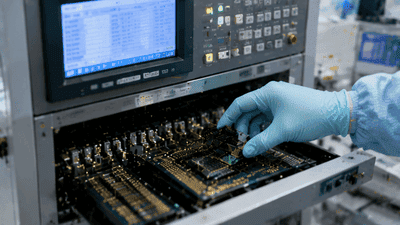
Incremental Demand for HBM Test and Burn-in Equipment – A Quantified Forecast
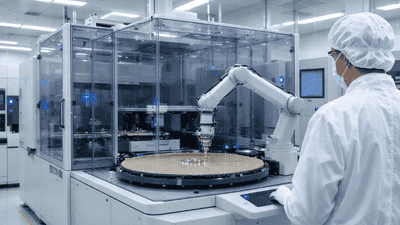
As High-Bandwidth Memory (HBM) moves from niche to mainstream across AI, HPC, and advanced graphics, test and burn-in equipment emerges as a critical bottleneck. HBM modules require more extensive, higher-fidelity testing than commodity DRAM: multi-die functional tests, high-speed channel validation, thermal stress profiles, and system-level burn-in under representative accelerator loads.



Compute Chips
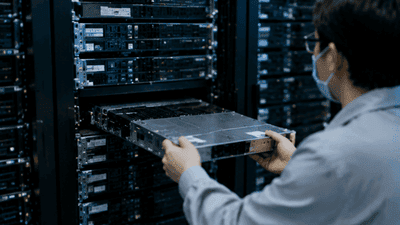
ASIC vs. GPU in 2026: Broadcom’s Custom Silicon Order Book Reveals the Shift
The AI chip market is becoming more diverse, not simply replacing one processor with another. GPUs remain valuable for programmable computing, while large customers increasingly commission custom accelerators that reflect their own workloads, infrastructure, and economics.

Inference Era Pricing: Why LPU Architecture Targets the Token Generation Bottleneck
The price of an AI response depends on more than how much arithmetic a chip can perform. It depends on how quickly the system accesses data, how efficiently it schedules requests, and whether the resulting answer arrives within the application’s time limit.
OpenAI’s Custom Chip with TSMC: The First Major LLM Company Going Silicon
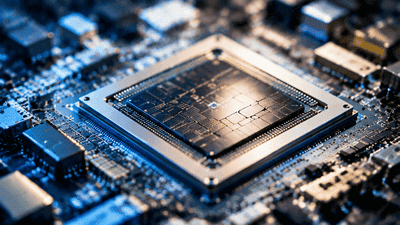
OpenAI is moving deeper into the hardware beneath its models. Instead of relying exclusively on processors designed for a broad market, it is helping create silicon around the workloads that power its own products. That is a significant change in responsibility: the company is no longer only a customer of computing infrastructure, but also a participant in defining it.