

Ethan Richardson
I study the evolution of high-bandwidth memory from earlier generations to emerging next-generation architectures. My research covers bandwidth, memory density, stack height, interface design, power efficiency, thermal characteristics, and the changing requirements created by AI accelerators. I am particularly interested in how each new generation of HBM addresses the limitations of previous memory technologies. I write for this website because HBM technology is developing rapidly, and the differences between generations are not always easy to understand from product specifications alone. Improvements in bandwidth or capacity can affect system architecture, packaging requirements, power consumption, and manufacturing complexity. My goal is to explain these changes within their broader technical context. My research follows HBM roadmaps and examines how increasing AI model sizes and accelerator performance requirements influence memory specifications. I also study the relationship between HBM density and the number of memory stacks required by high-performance computing systems. Another area of my work is the interaction between HBM and advanced packaging. Higher bandwidth and larger memory capacity require increasingly sophisticated interfaces between processors and memory. Packaging technology therefore plays an important role in determining how effectively the capabilities of a new HBM generation can be used. I also monitor semiconductor companies and investment themes associated with advanced memory. My objective is to provide readers with a detailed understanding of HBM technology development while explaining how technical transitions may affect manufacturing, supply, packaging, and AI computing infrastructure.
Advanced memory analyst covering HBM generations, bandwidth, density, stack height, power efficiency, interface technology, and AI accelerator requirements.
Ethan Richardson is an advanced memory technology analyst who studies the evolution of high-bandwidth memory and the increasingly demanding requirements of AI computing. His coverage focuses on how successive HBM generations improve memory performance and address emerging system requirements.
Ethan researches bandwidth, density, stack height, interface design, power efficiency, thermal characteristics, and memory capacity. His articles explain how changes in these specifications affect both HBM products and the architecture of the processors that use them.
His work also examines the connection between HBM development and the rapid growth of AI workloads. Larger models and increasingly powerful accelerators require greater memory bandwidth and capacity, creating new technical requirements for high-performance memory systems.
Advanced packaging is another important part of Ethan's research. The benefits of higher-bandwidth memory depend heavily on the interface between HBM and the processor, making package architecture, interconnect density, and thermal management important factors in each technology transition.
Through his articles, Ethan provides readers with a technology-focused perspective on HBM generations and explains how memory innovation is influencing AI accelerators, advanced packaging, and the wider semiconductor industry.
His Articles
Inverse Semi ETF Effectiveness: The Bear Market Tool Review
Semiconductor exchange-traded funds are usually associated with bullish participation in the technology cycle. Investors buy them to gain exposure to chip designers, memory manufacturers, foundries, equipment suppliers, and other companies expected to benefit from rising semiconductor demand. Yet the same industry can experience abrupt downturns when inventories rise, capital expenditure expectations weaken, technology cycles mature, or investor enthusiasm moves too far ahead of fundamentals. In those periods, an inverse semiconductor ETF can become an important tactical tool.

Quantifying the Seesaw Effect Between DXY and Asian Semiconductor Exports
The global chip trade lives on a currency axis. On one side sits the U.S. dollar, measured by the DXY index; on the other side sit Asia’s semiconductor exporters—Korea, Taiwan, Singapore, Malaysia, and others—selling integrated circuits, memory, and logic chips into a world that mostly pays in dollars. When the dollar strengthens, something usually gives. When it weakens, something else usually accelerates. The pattern has become familiar enough that people talk about a “seesaw” between DXY and Asian semiconductor exports.
Historical Correlation Between Semi Cycles and Global GDP Growth
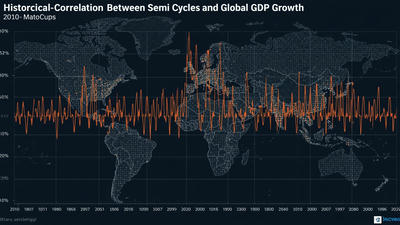
Semiconductor industry cycles and global GDP growth are deeply intertwined. Semiconductors power consumer electronics, data centers, automobiles, industrial automation, and countless embedded systems that form the backbone of modern economic activity. Conversely, macroeconomic conditions shape consumer demand, corporate capex, and the financing environment that determine fab investment and inventory behavior.

A Long-Short Strategy Framework for Semi Stocks During CPI Surprises
Inflation prints used to be background noise for semiconductor investors. Now, Consumer Price Index (CPI) days feel like event risk for the entire market. A hotter‑than‑expected CPI can send rates higher, the dollar stronger, credit spreads wider, and cyclicals—including semis—sharply lower. A cooler print can do the opposite, unleashing rallies in duration‑sensitive sectors. In that environment, the semi sector doesn’t just trade on earnings and AI narratives; it trades on macro surprises.
Global Risk Sentiment Cycles vs. Semi Equity Fund Positioning
Semiconductor stocks sit near the center of modern equity markets. They’re a direct play on AI, cloud, and digitalization, and at the same time a cyclical bet on global manufacturing and trade. That makes them uniquely sensitive to swings in global risk sentiment—the ebb and flow of investor appetite for risk driven by growth, inflation, liquidity, and geopolitical noise. When sentiment cycles turn, semi equity funds are often among the first to reposition.