

Daniel Morgan
I research semiconductor lithography materials, with a particular focus on photoresists and the materials required to create increasingly precise semiconductor patterns. My work examines material performance, process requirements, advanced lithography, and the relationship between materials innovation and semiconductor scaling. I publish on this website because lithography materials play a critical role in determining how successfully manufacturers can transfer increasingly complex patterns onto semiconductor wafers. As process dimensions become smaller, material properties and process control become increasingly important. My research follows photoresist technologies, advanced patterning requirements, process compatibility, material performance, and the evolution of lithography techniques used in leading-edge manufacturing. I also examine how new semiconductor architectures create additional material challenges. I monitor developments across logic, memory, and advanced packaging applications and study how material suppliers respond to increasingly demanding process specifications. My goal is to make semiconductor materials easier to understand by connecting chemistry, lithography processes, manufacturing requirements, and industry investment.
Materials analyst specializing in photoresists, lithography materials, advanced patterning, process compatibility, and materials innovation for leading-edge semiconductors.
Daniel Morgan is a semiconductor materials researcher specializing in photoresists and lithography-related materials. His work examines the material technologies required to create increasingly precise patterns during semiconductor manufacturing.
Daniel studies photoresist performance, advanced patterning, process compatibility, material properties, and the challenges created by increasingly complex semiconductor architectures. His coverage spans leading-edge logic, memory, and related manufacturing applications.
As semiconductor geometries become more demanding, lithography materials must meet increasingly strict requirements for resolution, uniformity, sensitivity, and process stability. Daniel follows how material suppliers respond to these requirements through new formulations and technologies.
His research connects materials science with semiconductor manufacturing economics. Through his articles, Daniel explains how developments in lithography materials can influence process capability, technology transitions, and the broader semiconductor materials supply chain.
His Articles

CNY Fluctuation and Equipment Import Costs: The Sensitivity Test
Currency movements can look distant from the factory floor, but for China's semiconductor industry, changes in the value of the Chinese yuan can quickly become a practical cost issue. Semiconductor manufacturing depends on sophisticated equipment, materials, components, software, and technical services sourced from a global supply chain.

Nvidia’s Groq 3 LPU: The Inference Coprocessor That Could Reshape AI Server Architecture
For years, the AI infrastructure conversation has revolved around a familiar question: how many GPUs can a data center deploy? Nvidia’s Groq 3 LPU suggests that the next question may be more interesting: which parts of an AI workload should actually run on those GPUs?

TSMC’s 2026 Equipment Procurement Raised to 1.9X: What It Signals for the Whole Supply Chain
TSMC’s equipment procurement signal points to something bigger than another strong quarter for chipmaking tools. It suggests that customer demand is forcing a rapid revision of manufacturing plans—and that the limiting factor is increasingly the supply chain’s ability to respond.

SOXX vs. SMH: The Holdings and Fee Comparison
For investors looking for concentrated exposure to the semiconductor industry, two exchange-traded funds repeatedly appear at the center of the conversation: the iShares Semiconductor ETF, commonly known by its ticker SOXX, and the VanEck Semiconductor ETF, known as SMH. Both funds are designed to provide targeted exposure to semiconductor companies, both are widely used as building blocks for technology portfolios, and both can serve as alternatives to owning a collection of individual chip stocks. Yet they are not interchangeable.
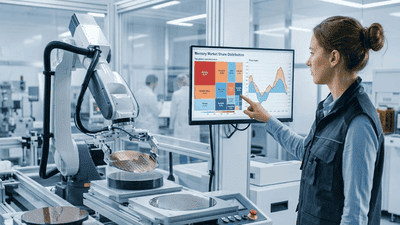
Cyclical Pricing Power Shifts Reflected by the HHI Industry Concentration Index for Memory
Pricing power in the memory sector does not move in a straight line. It ebbs and flows with cycles of demand, supply, consolidation, and technological transition. At the same time, the industry’s structure — who holds how much market share — is not static either. One of the most useful ways to capture this structure is the Herfindahl-Hirschman Index (HHI), a simple but powerful concentration metric that can reveal how much leverage the leading players have at any given moment.

The Inverse Relationship Between Mutual Funds’ Overweight Ratio in Semis and Forward Returns
Every cycle has its darlings. In recent years, semiconductor stocks have often played that role, riding the wave of digitization, cloud computing, artificial intelligence, and the endless need for more processing power. Mutual funds, hungry for performance and eager not to miss the next big thing, frequently pile into semis, pushing their portfolio weights well above benchmark levels. Yet a recurring pattern tends to show up: when mutual funds collectively become heavily overweight in semiconductor names, the sector’s forward returns often disappoint.

Post-HBM4 Roadmap: A Forward Look at HBM4E and HBM5 Specs
As HBM4 moves from pilot to early volume, industry attention is already shifting toward the next logical stages: evolutionary refinements sometimes labeled HBM4E and a more disruptive generational step often discussed under the HBM5 moniker. This post surveys likely technical directions, realistic performance and integration targets, key enabling technologies, supply-chain and manufacturing implications, and design trade-offs system architects should expect over the next 3–6 years.

The "Bullwhip Effect" in Semis – Which Stage Are We In?
The semiconductor industry is famous for its cycles, but behind those ups and downs lies a deceptively simple dynamic: small changes in end demand can amplify into huge swings in orders, capacity, and inventory further up the supply chain. This phenomenon is widely known as the bullwhip effect—and in semis, it is particularly powerful. Understanding where we are in the bullwhip sequence is crucial for chipmakers, OEMs, distributors, and investors who want to avoid being caught on the wrong side of the next swing.

How OTC Investors Efficiently Access Semi ETFs via Feeder Funds
For many over-the-counter investors, semiconductor ETFs look attractive but feel inconvenient. The underlying products may be listed overseas, quoted in foreign currencies, or traded in markets that are not easy to access directly. That is where feeder funds come in. A feeder fund can act as a local gateway, allowing OTC investors to gain semiconductor ETF exposure without having to handle every cross-border detail themselves. In practical terms, it is a way to make global semiconductor investing more accessible, more familiar, and often more efficient.
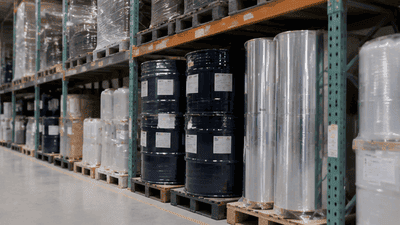
Critical Auxiliary Material Shortages in HBM Supply Chain: GMC and EMC Supply Gaps
High-Bandwidth Memory (HBM) adoption accelerated rapidly between 2022 and 2026 as AI, HPC, and advanced graphics drove demand for on-package, ultra-high-bandwidth memory. While attention has rightly focused on wafer and packaging capacity—fabs, interposers, and OSAT lines—another set of constraints has quietly become a systemic risk: shortages in key auxiliary materials, notably gas-phase metal-containing chemicals (GMCs) used in advanced deposition and surface treatments, and electrically conductive/thermally managed materials (EMCs) used in thermal interface and conductive adhesives.

SiC and GaN 3rd-Gen Semi Penetration Rates Breach the Tipping Point
For years, silicon carbide (SiC) and gallium nitride (GaN) were discussed as promising “next‑generation” power semiconductor materials with clear technical advantages but limited commercial deployment. Their adoption curves were slow, constrained by cost, supply chain maturity, and conservative design practices in automotive and industrial markets.

Tracking Domestic AI Chip Yield Ramp-Up: The Tough Climb from 40% to 70%
When countries or regions commit to building domestic AI chips, they quickly encounter a harsh reality: designing a competitive accelerator is only half the battle. The other half is manufacturing it at scale, with yields high enough to make the economics work. Moving from an early yield of around 40% to a more mature 70% is one of the toughest climbs in semiconductor production.