

Alexander Morgan
I focus on thematic and specialized semiconductor ETFs, including funds designed around equipment, materials, memory, AI infrastructure, and other specific parts of the chip ecosystem. My research examines how thematic definitions translate into actual portfolio exposure. I publish on this website because semiconductor investment themes can be very broad, while thematic ETFs often concentrate on a narrower set of companies. Understanding what a fund actually owns is therefore essential when evaluating its investment theme. My work compares thematic objectives, holdings, sector concentration, index rules, rebalancing, and exposure to different semiconductor value chains. I also examine how thematic products change as new technologies and industry priorities emerge. I follow emerging semiconductor ETF products and study how fund managers and index providers respond to trends such as AI computing, HBM, advanced packaging, semiconductor equipment, and materials. My goal is to provide readers with a clear view of thematic semiconductor ETFs and explain the relationship between a fund's stated theme and its underlying portfolio.
Thematic semiconductor ETF analyst covering AI, HBM, equipment, materials, memory, portfolio concentration, index rules, and emerging ETF strategies.
Alexander Morgan is a thematic semiconductor ETF researcher focused on specialized funds covering AI, memory, equipment, materials, and other semiconductor themes.
Alexander examines how thematic definitions translate into actual portfolio holdings. His research covers sector concentration, index methodology, rebalancing, company exposure, and the relationship between a fund's stated theme and its underlying securities.
He follows emerging semiconductor ETF products and monitors how new investment themes develop around AI computing, HBM, advanced packaging, equipment, and materials.
Through his articles, Alexander provides readers with a practical framework for understanding thematic semiconductor ETFs and the portfolio characteristics that distinguish specialized products from broader semiconductor funds.
His Articles

Alphabet’s Negative Free Cash Flow and AI CapEx Surge: The Semiconductor Spending Paradox
Alphabet’s negative quarterly free cash flow is not evidence that its operating business stopped generating money. It is evidence that infrastructure investment overtook that cash generation. For semiconductor suppliers, the same spending that squeezes Alphabet’s near-term cash flow can create substantial revenue opportunities.
Vera Rubin Platform Breakdown: 7 Chips, 5 Racks, and a 10x Inference Efficiency Leap
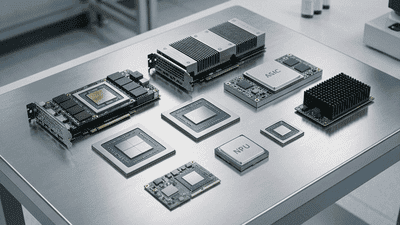
Nvidia’s Vera Rubin platform is easiest to understand as a coordinated AI infrastructure system, not simply a new GPU surrounded by accessories. Its components divide responsibility across computation, networking, storage, and orchestration so that fewer resources sit idle while another part of the system becomes a bottleneck.

Assessing the Allocation Value of Newly Launched Thematic Semi ETFs (Equipment/Materials/HBM)
Semiconductor themed ETFs used to be simple. You bought a broad fund like SMH or SOXX, got exposure to the sector’s biggest names, and let the cycle do the work. That world is changing fast. A wave of newly launched tactical semi ETFs now targets very specific slices of the value chain: equipment, materials, and high‑bandwidth memory (HBM). Instead of “chips,” the story becomes “tools,” “chemistry,” and “memory bottlenecks.” The question for allocators is not whether these themes are interesting—they clearly are. The real question is whether these tactical ETFs add meaningful allocation value on top of traditional broad semi exposure.

5-Year DCA Backtest of Semi ETFs – The Validity of the Smile Curve in China
Dollar-cost averaging is often treated as the most reasonable answer to a difficult market question: how do you invest in something volatile without trying to outsmart every move? In semiconductor ETFs, that question becomes even more relevant because the sector is famous for sharp cycles, headline-driven swings, and dramatic reratings. A five-year DCA backtest of China semiconductor ETFs is therefore more than a performance exercise. It is a way to test whether patience, consistency, and disciplined buying can overcome the sector’s turbulence. It is also a useful way to examine whether the so-called smile curve really holds up in China.

Tracking CHIPS Act Subsidy Disbursements: Which Companies Have Received Funds?
The CHIPS and Science Act has moved from legislation on paper to money on the table. Passed in 2022, it earmarks tens of billions of dollars in subsidies and tax incentives to rebuild U.S. semiconductor manufacturing, advanced packaging, and upstream supply chains, alongside new support for emerging domains such as quantum computing.

Empirical Evidence on the Critical Threshold of Negative Correlation Between 10Y Yields and Semi Valuations
In macro markets, relationships are often drawn as simple lines: “higher rates hurt growth,” “lower yields boost tech,” “semiconductors like easy money.” Reality is messier. Yet one pattern has become familiar in recent years—when long-term interest rates move beyond certain levels, valuations in high-duration sectors like semiconductors begin to respond in ways that look like mirror images. Stock charts and yield curves start to dance in opposite directions. The correlation turns negative, and for investors living through the AI chip super-cycle, that correlation matters.