

Lucas Anderson
I study the relationship between AI infrastructure spending and semiconductor demand. My research covers accelerator shipments, data-center construction, networking hardware, advanced packaging, high-bandwidth memory, and the manufacturing capacity required to support AI computing growth. I am interested in how investment in computing infrastructure spreads across different layers of the semiconductor supply chain. I write for this website because AI infrastructure is often discussed as if it were limited to accelerator purchases. In reality, the expansion of AI computing requires a much broader ecosystem that includes processors, memory, networking, storage, power systems, cooling, packaging, and manufacturing equipment. My goal is to explain how these components are connected. My work follows data-center investment plans and their implications for accelerator demand. I examine the relationship between AI workloads, compute requirements, server configurations, memory capacity, networking bandwidth, and the construction of new infrastructure. I also study how these requirements affect foundries, memory suppliers, packaging providers, and equipment manufacturers. Another important area of my research is the development of AI infrastructure outside traditional hyperscale data centers. Enterprise computing, sovereign AI projects, edge inference, and specialized industry applications can create different requirements for semiconductor performance, power efficiency, and system design. I also follow AI-related semiconductor investment themes. My aim is to help readers understand how infrastructure spending translates into demand across the semiconductor ecosystem and why different parts of the supply chain may experience different growth patterns. Through my articles, I provide an industry-focused view of AI computing expansion.
AI infrastructure analyst connecting data-center investment with accelerator demand, HBM, networking, advanced packaging, storage, and semiconductor manufacturing.
Lucas Anderson is an AI infrastructure analyst who studies how investment in data centers and computing systems translates into demand across the semiconductor industry. His coverage on this website connects AI infrastructure development with processors, memory, networking, packaging, and manufacturing.
Lucas examines accelerator shipments, data-center construction, server configurations, compute requirements, memory capacity, networking bandwidth, and power infrastructure. His research emphasizes that AI computing growth depends on a complete system rather than on processors alone.
His work also follows the supporting semiconductor supply chain. High-bandwidth memory, advanced packaging, networking chips, storage devices, foundry capacity, and manufacturing equipment all contribute to the deployment of AI infrastructure. Lucas explains how investment in one area can create demand or constraints in another.
Lucas also covers AI infrastructure beyond traditional hyperscale data centers, including enterprise computing, edge inference, sovereign AI projects, and specialized industry applications. These areas may require different combinations of performance, power efficiency, memory, and connectivity.
Through his articles, Lucas provides readers with a broader understanding of AI infrastructure investment and its impact on the global semiconductor ecosystem.
His Articles
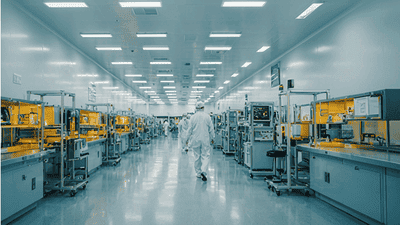
SK Hynix’s $15B Fab Bet: Why First Cleanroom Move-Up to February 2027 Matters
Three months can be a long time in memory manufacturing. Bringing a cleanroom forward from May to February 2027 gives SK hynix an earlier opportunity to install equipment, develop processes, and prepare capacity for customers. It does not guarantee three additional months of commercial shipments, but it can move the entire learning curve forward.

HBM4 Mass Production Kickoff: The 2026 Tech Roadmap Showdown Among 3 Memory Giants
By 2026, high bandwidth memory (HBM) has moved from a niche enabler of premium accelerators to a central battleground in the AI and advanced computing industry. The kickoff of HBM4 mass production marks a decisive escalation: the three leading memory giants are no longer just supplying components; they are effectively shaping the performance envelope and cost structure of the next generation of AI chips.

5-Year Rolling Beta Trends of the Semi Sector vs. Nasdaq 100
Semiconductors and the Nasdaq 100 have grown up together in the public imagination as the heartbeat of modern technology markets. But inside a portfolio, they are not the same thing. One is a concentrated, cyclical slice of the tech hardware stack; the other is a diversified basket of mega-cap growth, platforms, software, and chips. Over time, the way the semi sector moves relative to the Nasdaq 100—its beta—has shifted with macro regimes, interest rate cycles, credit conditions, and commodity dynamics. Understanding those 5‑year rolling beta trends can turn a macro curiosity into a practical risk tool.

Cross-Market Hedging Strategies Between Korea HBM Thematic ETFs and SOX
In 2026, the global AI trade doesn’t start in Silicon Valley; it often starts in Seoul. Korea’s memory giants, especially in high-bandwidth memory (HBM), have become key price-setters for AI hardware, while the Philadelphia Semiconductor Index (SOX) still anchors U.S. chip sentiment. Cross market hedging between a Korea HBM-focused theoretical ETF and SOX is therefore more than an academic exercise—it is a practical question for anyone allocating to AI storage and computing power across regions.