

David Bennett
I focus on U.S. semiconductor indices, particularly benchmarks representing major chip designers, manufacturers, equipment companies, and related technology businesses. My research examines index composition, weighting, concentration, performance, and changes in exposure over time. I write for this website because U.S. semiconductor indices are widely used as indicators of technology-sector performance, yet the companies represented in an index can change significantly as industry leadership evolves. My work follows major U.S. semiconductor benchmarks and examines how their largest constituents influence overall performance. I also study the balance between chip designers, foundries, equipment suppliers, and other semiconductor businesses. I pay particular attention to index methodology and rebalancing. Understanding why companies enter, leave, or receive different weights can provide important context when interpreting index movements. My goal is to explain U.S. semiconductor indices from both an industry and market perspective and help readers understand what their performance actually represents.
U.S. semiconductor index researcher covering SOX-related benchmarks, constituent concentration, weighting, rebalancing, industry exposure, and market performance.
David Bennett is a semiconductor index analyst specializing in U.S. semiconductor benchmarks and the companies represented within them. His research examines index composition, constituent concentration, weighting, and performance.
David follows the representation of chip designers, foundries, equipment manufacturers, and other semiconductor companies within major U.S. benchmarks. He studies how changes in industry leadership can influence index composition.
Index methodology and rebalancing are central to his work. Changes in constituent weights can significantly affect benchmark exposure, particularly when a small number of large semiconductor companies represent a substantial portion of an index.
Through his articles, David provides readers with context for interpreting U.S. semiconductor index performance and explains how index structure and semiconductor industry developments influence benchmark behavior.
His Articles
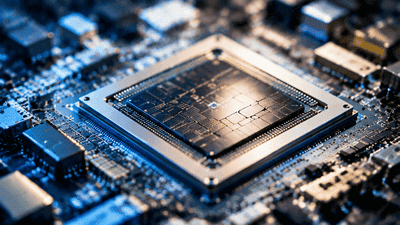
OpenAI’s Custom Chip with TSMC: The First Major LLM Company Going Silicon
OpenAI is moving deeper into the hardware beneath its models. Instead of relying exclusively on processors designed for a broad market, it is helping create silicon around the workloads that power its own products. That is a significant change in responsibility: the company is no longer only a customer of computing infrastructure, but also a participant in defining it.

AI ETF Pseudo-Correlation: Does It Truly Represent Memory?
AI-themed ETFs have become an increasingly convenient way to gain exposure to the expanding artificial intelligence infrastructure ecosystem. They can include semiconductor designers, GPU and accelerator companies, networking suppliers, data-center operators, cloud infrastructure businesses, equipment manufacturers, and memory producers. On the surface, this broad exposure may appear to provide investors with a diversified way to participate in the AI computing cycle.

DXY and Asian Semiconductor Exports: The Seesaw Effect
The semiconductor industry in Asia sits at the intersection of two powerful forces: global technology demand and global financial conditions. While chipmakers, equipment suppliers, and electronics manufacturers are often analyzed through orders, inventories, utilization rates, and capital expenditure, currency movements can quietly reshape the economics underneath the entire export chain. Among the most influential variables is the U.S. Dollar Index, or DXY.

The Dual Impact of HBM Reliability Test Standard Upgrades on Yield and Cost
High Bandwidth Memory (HBM) has moved into the mainstream of advanced computing, powering AI accelerators, high‑end GPUs, and cutting‑edge server platforms. As deployment scales and workloads become more demanding, the industry has steadily tightened reliability expectations for HBM devices. This has led to upgraded reliability test standards across thermal, electrical, mechanical, and system‑level dimensions.

Semi Inventory Days Drop Below 90, Restocking Cycle Officially Begins
When semiconductor industry inventory days fall below the 90-day threshold, it’s more than a statistic — it’s a signal. After several years of volatile demand, over-ordering, and aggressive destocking, the recent decline in inventory days below 90 indicates the broad channel, distributor, and supplier stock positions are lean enough to trigger a deliberate restocking cycle. For investors, OEMs, procurement teams, engineers, and policymakers, the implications are material: lead times will lengthen for constrained parts, prices may firm in select segments, and capacity planning will shift from defensive idling toward targeted expansion.

The Pricing Impact of SOXX’s Portfolio Changes on Individual Constituents
Semiconductor-themed ETFs have become a go-to vehicle for investors who want exposure to chips, equipment makers and the broader AI hardware ecosystem without betting on a single stock. Among them, the iShares Semiconductor ETF, ticker SOXX, is one of the bellwethers of the space, closely watched by both retail traders and institutional desks for what its moves may signal about the sector as a whole. When SOXX changes its portfolio – whether through scheduled rebalancing or more tactical adjustments – the ripple effects can be felt not only in the ETF’s own price, but in the pricing of its individual constituents as well.

The Structural Contradiction of Layoffs and Mass Hiring Co-Existing in Semi Industry
The semiconductor industry has always been cyclical, but the current moment feels particularly paradoxical. In the same headlines, we see announcements of layoffs, hiring freezes, and project cancellations alongside news of massive recruitment drives, new fab construction, and aggressive talent campaigns.

HBM Power Consumption and Thermal Issues Become Core System-Level Design Bottlenecks
High-Bandwidth Memory (HBM) has become essential for modern AI accelerators and high-performance compute nodes because it delivers massive on-package bandwidth and high energy efficiency per bit transferred. Yet as HBM stack counts, per-die speeds, and module counts per accelerator increase, power consumption and thermal management move rapidly from component-level concerns into system-level bottlenecks.
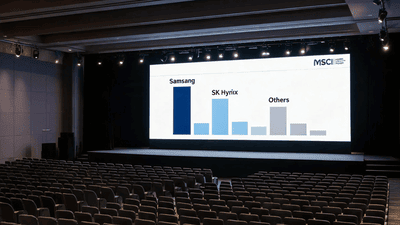
Trends in the Dominance of Korea’s Memory Duo (Samsung/SK Hynix) in the MSCI Korea Index
AI storage and computing power are not abstract concepts in Korea. They are embodied in two names: Samsung Electronics and SK Hynix. Together, this memory duo has become so dominant that the MSCI Korea Index—and any ETF or index derivative tied to it—is increasingly a leveraged bet on AI memory cycles. Understanding how their dominance has evolved, and what it implies for AI storage and compute exposure, is essential for anyone trading Korea-focused ETFs or using index derivatives as hardware proxies.