

Ryan Carter
My research focuses on HBM, AI memory, and the investment products designed to capture the growth of memory infrastructure supporting artificial intelligence. I study HBM demand, DRAM exposure, memory manufacturers, packaging technologies, and the relationship between AI workloads and memory requirements. I publish on this website because memory has become a central component of AI computing. Advanced accelerators require increasingly large amounts of high-bandwidth memory, creating a specialized investment theme that differs from broader semiconductor exposure. My work examines HBM-focused ETFs and AI memory strategies, including their holdings, concentration, geographic exposure, and underlying index methodologies. I also compare memory-focused products with broader AI semiconductor funds. I follow HBM technology transitions, capacity expansion, memory pricing, and AI data-center demand to understand how these trends may affect thematic investment products. Through my articles, I aim to explain the relationship between AI memory technology and ETF portfolio construction in a clear and practical way.
AI memory ETF analyst specializing in HBM, DRAM, memory manufacturers, AI workloads, packaging, thematic indices, and memory-focused portfolios.
Ryan Carter is an AI memory and HBM ETF researcher specializing in investment products connected to the rapidly expanding memory requirements of AI computing.
Ryan studies HBM manufacturers, DRAM exposure, advanced packaging, memory capacity, and AI data-center demand. His research examines how these technology trends are represented within memory-focused and AI semiconductor ETFs.
He compares HBM-themed products with broader AI and semiconductor funds, focusing on holdings concentration, geographic exposure, index methodology, and the degree of direct memory exposure.
Ryan also follows HBM technology transitions, capacity expansion, pricing, and AI infrastructure investment. Through his articles, he explains how developments in AI memory can influence the structure and exposure of thematic investment products.
His Articles

Investment Insights from Hot Chips 2026 on the 2027 AI Chip Technology Roadmap
By mid‑2026, the AI hardware world has learned to treat Hot Chips not just as a technical conference, but as an unofficial preview of the next year’s capital flows. Architectures unveiled, packaging roadmaps hinted at, and memory strategies debated on stage all feed into how investors think about the 2027 AI chip landscape. When engineers share their plans, markets quietly rearrange expectations.
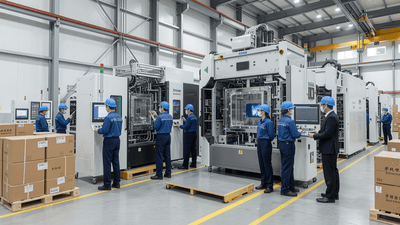
Sensitivity Stress Test of CNY Fluctuations on Domestic Equipment Import Costs
Exchange rates are often discussed as abstract macro variables, but for firms that import equipment they show up as very concrete line items: higher or lower invoice amounts, changed project budgets, revisions to CapEx plans. In China, where many of the most advanced production tools and capital goods are still imported and priced in foreign currencies—especially dollars, euros, and yen—fluctuations in the renminbi (CNY) can have a direct and sometimes material impact on domestic equipment import costs.

HBM Re-rated from Cyclical to AI Growth Asset – A Valuation System Overhaul
High Bandwidth Memory (HBM) has long been categorized alongside other DRAM products as part of a cyclical commodity business, subject to booms and busts driven by general compute and consumer demand. In the AI era, that classification is increasingly inaccurate. As accelerators for training and inference depend more deeply on HBM for performance and energy efficiency, the asset’s economic profile is shifting from cycle-sensitive to structurally supported by long-term AI growth. This re-rating of HBM—from cyclic memory component to AI growth asset—forces a rethink of how investors, companies, and policymakers value and manage it.