

Michael Foster
I focus on semiconductor ETF portfolio construction, with particular attention to how different funds allocate capital across chip designers, foundries, memory manufacturers, equipment suppliers, and other semiconductor businesses. I publish on this website because an ETF name does not always reveal the actual exposure inside the portfolio. Two products described as semiconductor funds may have very different concentrations, geographic allocations, company sizes, and sector weightings. My research examines portfolio concentration, top holdings, rebalancing, geographic exposure, market capitalization, and sector diversification. I also study how index rules influence the final composition of an ETF. Another area of my work is comparing broad semiconductor ETFs with targeted products focused on equipment, memory, AI computing, or other subsectors. I believe understanding portfolio construction is essential when analyzing the practical exposure of an ETF. My goal is to help readers look beyond ETF labels and understand the actual companies, sectors, and market factors represented within semiconductor funds.
ETF portfolio researcher focused on semiconductor holdings, concentration, geographic allocation, market capitalization, sector diversification, and rebalancing.
Michael Foster is a semiconductor ETF portfolio researcher specializing in holdings and allocation structure. His work examines how different funds distribute exposure across the major segments of the semiconductor industry.
Michael analyzes top holdings, portfolio concentration, geographic allocation, market capitalization, sector diversification, and rebalancing practices. He pays particular attention to the differences between ETF names and their actual underlying exposure.
His coverage compares broad semiconductor funds with specialized products targeting memory, equipment, AI computing, or other industry segments.
Through his articles, Michael helps readers understand how portfolio construction and index rules shape the practical exposure delivered by semiconductor ETFs.
His Articles
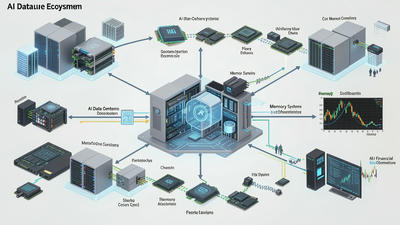
What Does the 90% Correlation Between AI Infrastructure and Memory Indices Imply?
When AI infrastructure ETFs and memory indicators move with a 90% correlation, it is more than a statistical curiosity. It is a message about how the market sees the AI stack. A correlation that high says investors are treating memory and AI infrastructure as almost the same trade: when one goes up, the other almost always does; when one goes down, the other usually follows. For ETF and index derivative users betting on AI storage and computing power, that has deep implications for allocation, risk management, and how we think about “diversification” inside the AI hardware theme.

Semi Style Rotation Patterns During the Treasury Curve Dis-Inversion Period
When the US Treasury curve inverts—short‑term yields rising above long‑term yields—it doesn’t just spook bond investors. It quietly rewrites how equity sectors trade, including semiconductors. An inverted curve is a signal about future growth, funding costs, and recession risk. Semi stocks, with their mix of cyclical exposure and long‑duration growth narratives, respond in distinct ways. Within the sector, “style” rotation—between growth vs value, large vs small, equipment vs device makers—often emerges as investors reposition for a different macro regime.