

Henry Cooper
I focus on advanced semiconductor manufacturing equipment, particularly the tools and technologies required for leading-edge logic and high-performance semiconductor production. My research examines lithography, patterning, process control, metrology, and the manufacturing challenges associated with increasingly sophisticated process nodes. I publish on this website because advanced semiconductor manufacturing is becoming more equipment-intensive. Smaller geometries, new transistor architectures, increasingly complex interconnects, and advanced packaging all require manufacturers to control processes at extremely tight tolerances. Equipment capability therefore has a direct connection with technology development. My research follows leading-edge foundry and logic roadmaps and the equipment requirements associated with each major manufacturing transition. I examine lithography strategies, patterning complexity, process control, overlay requirements, and the increasing importance of metrology and inspection. I also study equipment supplier relationships with major semiconductor manufacturers. Technology qualification can take considerable time, and the ability of an equipment supplier to support high-volume manufacturing can be as important as the technical specifications of an individual tool. Beyond lithography, I monitor the wider ecosystem of advanced manufacturing equipment, including deposition, etch, cleaning, metrology, inspection, and process-control systems. My objective is to give readers a complete view of the equipment stack supporting leading-edge semiconductor production and the investment trends surrounding it.
Advanced manufacturing equipment analyst covering lithography, patterning, metrology, inspection, process control, leading-edge logic, and foundry technology roadmaps.
Henry Cooper is an advanced semiconductor manufacturing equipment analyst focused on the technologies supporting leading-edge logic and high-performance semiconductor production. His coverage includes lithography, patterning, metrology, inspection, and process control.
Henry studies how new semiconductor process generations increase equipment requirements. Smaller geometries, new transistor structures, complex interconnects, and tighter manufacturing tolerances can require additional process capabilities and increasingly precise control systems.
Lithography and patterning are key areas of his research. Henry follows leading-edge foundry roadmaps and examines how changes in patterning strategies, overlay requirements, and process complexity influence equipment demand.
His work also covers metrology, inspection, deposition, etch, cleaning, and other equipment categories that support advanced manufacturing. He examines these tools as an integrated manufacturing ecosystem rather than as isolated product categories.
Henry also follows equipment qualification and customer relationships across leading semiconductor manufacturers. Through his articles, he explains how advanced process development translates into equipment requirements and how technology roadmaps shape the future of semiconductor manufacturing investment.
His Articles

Memory Weight in AI Compute Indices: The Underweight Correction
Artificial intelligence investment has created a new generation of thematic indexes designed to capture the companies benefiting from the expansion of computing infrastructure. These indexes often emphasize GPUs, accelerators, networking, cloud platforms, data centers, semiconductor equipment, and power infrastructure. Memory is usually present, but its representation can vary substantially. In some AI compute indexes, memory companies occupy a relatively small position compared with their economic importance to the underlying systems.

Global M2 and Semi Cycle Bottoms: The Historical Overlap
Semiconductor cycles are often discussed through inventory, capacity utilization, memory pricing, capital expenditure, and end-market demand. Yet beneath these industry-specific indicators sits a broader financial variable: global liquidity. Changes in global M2, broadly interpreted as the amount of money and highly liquid deposits circulating across major economies, can influence the financial environment in which semiconductor companies operate. When liquidity expands, financial conditions may become more supportive for investment and risk assets. When liquidity contracts, valuation multiples, corporate financing, and technology spending can all come under pressure.
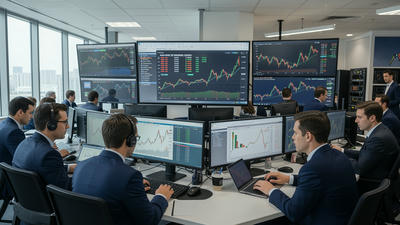
Market Sentiment Revealed by Changes in Semi ETF PCF Baskets
If you spend any time in the semiconductor space, you quickly realize that prices do not move only on earnings calls and product launches. They also move on flows, on mechanics, on the quiet, daily processes that keep exchange-traded funds running. One of the most important of those processes is the construction of the Portfolio Composition File, or PCF – the basket that authorized participants use to create and redeem ETF shares. When we talk about semi-themed ETFs, the evolution of those PCF baskets can be a surprisingly rich source of information about what the market is really thinking.

Defensive Portfolio Strategies for Semi Stocks During VIX Spikes
Semiconductor stocks live at the intersection of technology excitement and macro stress. They benefit from long-term growth in AI, cloud, and electrification, but they also sit among the first sectors to get hit when volatility spikes. The VIX—the so‑called “fear index”—is a quick gauge of that stress. When it surges, correlation rises, liquidity can dry up, and cyclicals like semis often move sharply. Yet volatility episodes don’t have to turn into permanent damage for semi-heavy portfolios if you have a defensive playbook ready.