

George Anderson
I research semiconductor capital expenditure and equipment investment cycles. My focus is on understanding how chipmakers translate demand expectations into manufacturing investment and how equipment orders can signal changes in the broader semiconductor cycle. I write for this website because semiconductor equipment spending often provides an early window into future manufacturing capacity. Companies may commit to new tools months or years before the resulting semiconductor output reaches the market. This makes equipment investment an important indicator when analyzing industry expansion, contraction, and technology transitions. My research covers capital expenditure plans, equipment bookings, fab construction, wafer capacity additions, utilization rates, and investment allocation across logic, memory, foundry, and specialty semiconductor manufacturing. I compare company-level spending plans with broader industry demand. I also examine the timing of equipment orders. A company can announce a large capital expenditure program without immediately converting the entire budget into equipment purchases. Lead times, construction schedules, technology qualification, and demand visibility can all influence the timing of actual investment. Another part of my work is evaluating the relationship between equipment cycles and semiconductor cycles. I track how inventory corrections, AI demand, memory recovery, advanced-node transitions, and regional manufacturing policies influence capital spending. My goal is to provide readers with a disciplined framework for understanding semiconductor equipment investment and the signals it provides about future manufacturing capacity.
Semiconductor capex analyst focused on equipment investment cycles, fab expansion, equipment bookings, wafer capacity, utilization, and manufacturing spending.
George Anderson is a semiconductor capital expenditure and equipment-cycle analyst. His research examines how semiconductor manufacturers convert demand expectations and technology roadmaps into fab construction, equipment purchases, and manufacturing capacity.
George tracks capital expenditure plans, equipment bookings, fab construction, wafer capacity additions, utilization rates, and investment allocation across logic, memory, foundry, and specialty semiconductor manufacturing.
The timing of equipment investment is a central part of his research. Equipment may be ordered long before new production capacity becomes operational, while construction schedules, technology qualification, lead times, and customer demand can influence the pace of spending.
George also compares equipment cycles with broader semiconductor cycles. Memory recoveries, AI infrastructure investment, inventory corrections, advanced-node transitions, and regional manufacturing initiatives can all influence the direction and composition of semiconductor capital spending.
Through his work, George provides readers with a structured framework for interpreting equipment investment and explains why equipment bookings and capital expenditure trends can offer important information about future semiconductor manufacturing capacity.
His Articles
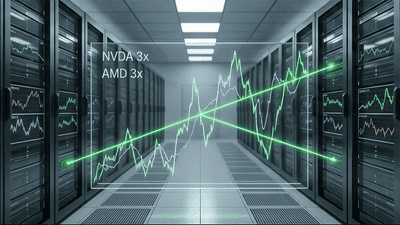
Leveraged Semi ETF Decay: The Path Dependency Analysis
Leveraged semiconductor ETFs are among the most aggressive instruments available to investors who want concentrated exposure to the chip cycle. By seeking two times or three times the daily performance of a semiconductor index, these products can magnify gains when momentum is strong and the underlying market moves persistently in one direction. The same structure, however, creates a less intuitive outcome when markets become volatile. Over periods longer than a single trading session, the return of a leveraged semiconductor ETF can differ substantially from the simple multiple many investors expect.

Can Smart Beta Semi ETFs Outperform Traditional Cap-Weighted Products?
Semiconductor themed ETFs have become one of the fastest-growing corners of the ETF world, driven by AI, data-center infrastructure, and the broader digitization of everything. Most investors know the big, traditional funds—market-cap weighted products that simply give more weight to the largest chip companies. But a newer wave of “smart beta” semi ETFs now promises something more: improved risk-adjusted returns by tilting toward specific factors or using alternative weighting schemes. The natural question is whether these smart beta semi ETFs can realistically outperform their traditional cap-weighted cousins.

Hybrid Bonding Adoption in HBM4 and Its Supply Chain Opportunities
Hybrid bonding—a suite of direct copper-to-copper and copper-to-dielectric bonding techniques—has become central to the HBM4 roadmap. Where previous HBM generations relied primarily on micro-bumps and through-silicon vias (TSVs), HBM4 pushes signaling density and electrical performance to levels that make hybrid bonding not optional but essential.

HBM’s Gross Margin Far Exceeds Traditional DRAM – A P&L Repair Effect for Memory Makers
High-Bandwidth Memory (HBM) has evolved from a niche, premium product to a strategic revenue generator for memory manufacturers. Compared with commodity DRAM, HBM commands higher average selling prices (ASPs), deeper integration services, and packaging premiums that lead to significantly superior gross margins. For memory makers facing cyclical commodity DRAM pricing and margin compression, HBM presents a meaningful “P&L repair” lever—a way to improve profitability, stabilize revenue mix, and insulate firms from the worst swings in the DRAM cycle.
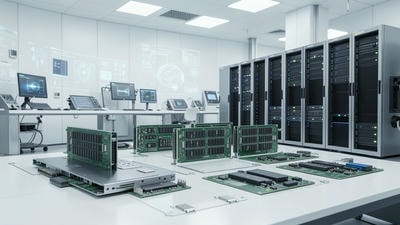
An Attempt at Compiling a Memory+Compute Fusion Thematic Index – A Dual-Track Framework
Most AI investors talk about “compute” as if it were the whole story: GPUs, accelerators, chips, cores. But every one of those cores needs somewhere to read from and write to. Memory and storage define how wide the data highway really is. In practice, AI performance is a fusion of compute and memory, not a solo act. So why do so many indices and ETFs separate them into different silos—one for semiconductors, one for memory, one for data centers—when the actual workloads keep blending them?