

Ethan Parker
I analyze the competitive landscape of AI semiconductor companies and the technologies that differentiate their products. My research includes GPU architectures, custom accelerators, inference chips, networking silicon, processor roadmaps, and system-level integration. I am particularly interested in how companies build complete computing platforms rather than competing only through individual chip specifications. I publish on this website because the AI chip market is becoming increasingly complex. Competition is influenced by architecture, software, memory bandwidth, packaging, networking, manufacturing capacity, customer relationships, and the ability to deliver complete systems. I believe that a useful analysis must consider these factors together. My research follows the development of general-purpose GPUs, customized AI ASICs, inference processors, and specialized chips for different workloads. I compare their intended applications and examine how design choices affect performance, efficiency, scalability, and deployment costs. I also monitor how cloud providers and enterprise customers approach customized silicon. Another part of my work focuses on the connection between processor roadmaps and the semiconductor supply chain. Advanced AI chips depend on leading-edge foundries, high-bandwidth memory, advanced packaging, substrates, networking components, and specialized equipment. Changes in any of these areas can influence the competitive position of an accelerator platform. I also follow semiconductor investment themes related to AI computing. My aim is to provide readers with a clear view of the technology, manufacturing, and commercial factors that shape the AI semiconductor market. I focus on documented developments and industry evidence rather than exaggerated claims about individual products.
AI chip competition analyst covering GPU roadmaps, custom accelerators, inference processors, networking silicon, software ecosystems, and system integration.
Ethan Parker is an AI chip competition analyst who studies the companies, architectures, and technology platforms shaping the AI semiconductor market. His work on this website covers GPUs, custom ASICs, inference processors, networking silicon, and specialized computing products.
Ethan examines competition beyond individual chip specifications. His research considers processor architecture, software ecosystems, memory bandwidth, advanced packaging, networking, manufacturing availability, customer relationships, and complete system integration.
His coverage compares general-purpose GPUs with customized and specialized accelerators designed for specific AI workloads. Ethan explores how different processor designs influence performance, efficiency, scalability, deployment costs, and the requirements of cloud and enterprise customers.
Ethan also follows the semiconductor supply chain supporting AI processor development. Leading-edge foundries, high-bandwidth memory, advanced packaging, substrates, networking components, and manufacturing equipment all play important roles in the delivery of modern AI computing platforms.
Through his contributions, Ethan provides readers with a detailed view of the technical, manufacturing, and commercial factors influencing competition across the AI semiconductor industry.
His Articles

Japan’s Semi Renaissance: Joint 2nm R&D Progress Among 8 Major Giants
Japan’s semiconductor industry is experiencing a genuine renaissance. After decades in which the country’s role shifted from dominant memory and logic supplier to more specialized niches in equipment, materials, and certain devices, a new wave of coordinated effort is pushing Japan back toward the leading edge of process technology.
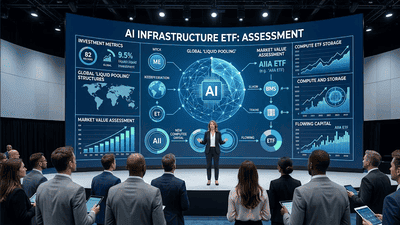
Investment Value Assessment of the World’s First Liquid-Cooling AI Infrastructure ETF
AI is no longer just about algorithms and GPUs. It is about racks, megawatts, memory channels, cooling loops, fiber routes and power grids. As investors have started to appreciate that, AI infrastructure ETFs have begun to appear—funds that own the physical and technical backbone of AI rather than just the software and chips running on top of it. Now imagine a step further: a “liquid pooling” AI infrastructure ETF, designed not just to hold infrastructure stocks, but to behave like a pooled participation vehicle for the entire AI infrastructure stack.

Europe’s Chips Act Catch-Up Dilemma: The Gap Between Capacity Targets and Reality
Europe’s Chips Act was launched with a bold ambition: to roughly double the continent’s share of global semiconductor production and secure strategic autonomy in a technology that underpins everything from cars and industrial equipment to cloud computing and defense systems. Policymakers framed it as a catch‑up mechanism—Europe would move from dependence on foreign fabs toward a more balanced, resilient ecosystem.