

Ethan Mercer
I focus on the global semiconductor industry cycle, with particular attention to capacity expansion, inventory normalization, capital expenditure, semiconductor demand, and the increasingly important relationship between technology investment and the broader economy. My research is built around a simple idea: semiconductor markets are easier to understand when individual company announcements are placed within the larger industry cycle. I therefore spend considerable time studying wafer capacity, fab utilization, inventory levels, pricing conditions, equipment spending, and demand trends across different regions and product categories. I write for this website because semiconductor developments are often reported as isolated events, even though many of them are connected by the same underlying cycle. A new fab, an increase in equipment spending, a change in memory inventories, or a shift in AI infrastructure investment can all become important signals when viewed together. My aim is to provide readers with a structured way to understand these connections and to distinguish short-term market noise from longer-term changes in industry fundamentals. My research also follows the investment side of the semiconductor industry. I examine how changes in supply, demand, capital expenditure, technology transitions, and macroeconomic conditions can influence semiconductor companies, sector indices, and related investment themes. I do not approach this work as a prediction exercise. Instead, I focus on identifying the measurable factors that can help explain why market expectations change. Through my work on this site, I hope to make semiconductor cycle research accessible to both industry readers and investors. The semiconductor industry is complex, global, and highly interconnected, and I believe that a clear understanding of its cycle can provide useful context for almost every major development within the sector.
Global semiconductor industry analyst focused on capacity, inventories, capital expenditure, utilization, and long-term industry cycles. Ethan connects manufacturing trends, demand conditions, and macroeconomic developments to explain how semiconductor markets move through different stages of the cycle.
Ethan Mercer is a semiconductor industry analyst who focuses on the global semiconductor cycle and the structural forces that influence supply, demand, and investment across the industry. His coverage on this website examines semiconductor markets from a broad industry perspective rather than concentrating exclusively on individual companies or products.
His research focuses on wafer capacity, fab utilization, semiconductor inventories, pricing conditions, capital expenditure, equipment spending, and changes in end-market demand. By bringing these indicators together, Ethan helps readers understand how seemingly separate developments can form part of a larger semiconductor cycle.
Ethan also follows the relationship between semiconductor technology investment and the broader global economy. His coverage considers how AI infrastructure, consumer electronics, automotive demand, data centers, government incentives, and regional manufacturing strategies can influence semiconductor investment and capacity decisions.
Investment research is another important part of Ethan's work. He examines how changes in industry fundamentals are reflected in semiconductor companies, sector indices, and related investment themes. His approach emphasizes industry evidence and observable market conditions rather than short-term speculation.
Through his contributions to the site, Ethan provides readers with a structured view of the semiconductor industry cycle and the fundamental indicators that can help explain changes in market conditions.
His Articles
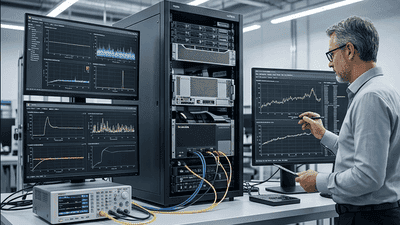
TPU 8t Commercial Launch: Can Google’s Custom Silicon Finally Challenge Nvidia’s Moat
Google’s TPU 8t can challenge Nvidia in selected large-scale AI workloads, but it does not need to replace GPUs everywhere to matter. Its strongest opportunity is to make Google’s infrastructure an attractive alternative for customers willing to optimize models and software around a different computing platform.

The Impact of 2026 Semi Industry ESG Ratings on Financing Costs
By 2026, environmental, social, and governance (ESG) metrics have moved from the margins of semiconductor boardroom discussions to the center of capital‑markets conversations. Investors, lenders, and rating agencies now routinely bake ESG scores into their assessment of risk and return. For a capital‑intensive industry like semiconductors—where fabs cost tens of billions of dollars and balance sheets carry large debt loads—the way ESG ratings influence financing costs is no longer a theoretical concern.
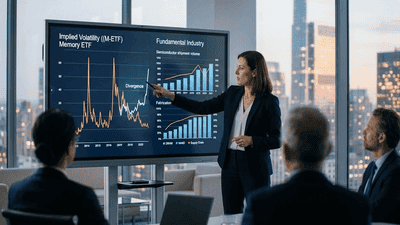
Divergence Alert Signals Between Memory ETF Implied Volatility and Industry Fundamentals
AI storage and computing power have pushed memory from a quiet subsector into the center of investor attention. DRAM, NAND, and especially HBM now anchor multi‑billion‑dollar ETFs and a growing ecosystem of options and index derivatives. As that ecosystem matures, implied volatility on memory ETFs has become one of the most watched gauges of risk and opportunity. But implied volatility is not the same thing as fundamentals. When memory ETF implied vol and industry fundamentals diverge, the difference is not just noise. It is an alert signal.