

Daniel Foster
I study the transition toward DDR5 and the changing economics of modern memory systems. My research focuses on server memory, PC memory, data-center requirements, memory capacity, data rates, production capacity, and pricing cycles. I am particularly interested in how the adoption of a new memory standard affects both semiconductor manufacturers and the systems that depend on their products. I write for this website because DDR5 represents more than a simple replacement for an older memory standard. Higher speeds, greater densities, new module architectures, and changes in memory management can influence server design, processor platforms, power consumption, and total system costs. Understanding these relationships is important when evaluating the pace of adoption. My work follows DDR5 deployment across enterprise servers, cloud infrastructure, PCs, workstations, and other computing platforms. I examine how customer demand, processor platform transitions, and memory pricing influence adoption rates. I also research the supply side of the DDR5 market. Capacity allocation, manufacturing yields, product mix, and investment decisions can affect the availability and pricing of different memory products. I compare these developments with broader DRAM market conditions. In addition to technology research, I follow semiconductor investment themes associated with DDR5 and server memory. My goal is to provide readers with a detailed view of the transition toward higher-performance memory and explain how technology adoption interacts with supply, demand, manufacturing, and industry investment.
DDR5 and server memory analyst focused on adoption, memory capacity, data rates, production economics, pricing, and data-center requirements.
Daniel Foster is a memory technology and market analyst specializing in DDR5, server memory, and the transition toward higher-performance DRAM systems. His work examines how new memory standards affect computing platforms, manufacturers, and the broader semiconductor industry.
Daniel follows DDR5 adoption across enterprise servers, cloud infrastructure, PCs, workstations, and other computing systems. His research considers memory capacity, data rates, module architecture, power requirements, processor platforms, and system-level costs.
He also studies the supply side of the DDR5 transition. Manufacturing capacity, product mix, yields, customer demand, and investment decisions can all influence the availability and pricing of DDR5 products. Daniel places these developments within the wider DRAM market cycle.
Data-center computing is a major area of his coverage. Increasing server memory requirements and growing cloud workloads can influence both the quantity and specification of memory required by modern computing infrastructure.
Through his contributions, Daniel provides readers with a detailed perspective on DDR5 adoption and explains how technology transitions, manufacturing conditions, pricing, and data-center demand interact within the global memory market.
His Articles
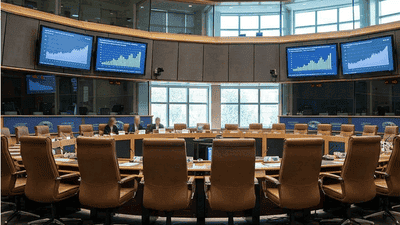
2026 Midterm Elections and Semi Policy Pulse: The Scenario Analysis
The 2026 midterm elections are shaping up to be one of the most consequential votes for the semiconductor industry in recent memory. While political drama dominates headlines, the real story lies in how different electoral outcomes will ripple through financial markets—interest rates, exchange rates, credit spreads, and commodity prices all stand to shift based on who controls Congress.

Liquidity Impact Cost Assessment for Thematic ETFs – The Case of Small-Cap Memory Constituents
AI storage and computing power have turned memory from a supporting character into a main protagonist. New thematic ETFs built around DRAM, HBM, NAND and enterprise storage are launching into a market where demand is surging and price cycles are volatile. But underneath the narrative lies a practical question that matters a lot for investors and product designers: what does it actually cost, in liquidity terms, to include small cap memory names in these vehicles?
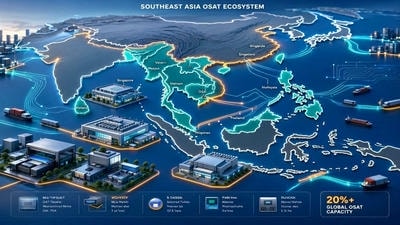
SE Asia’s Share of Global OSAT Capacity Breaks 20% for the First Time
Outsourced Semiconductor Assembly and Test (OSAT) has long been the quiet backbone of the chip industry, turning bare wafers into usable, reliable packaged devices. For decades, much of the attention has focused on front‑end fabrication hubs in the US, Europe, Taiwan, Korea, and increasingly China.

The Impact of Offshore CNY Liquidity Tightening on HK-Listed Semi Valuations
Hong Kong has become a crucial bridge between mainland China’s capital and global semiconductor markets. Funds managed out of HK often hold stakes in chip designers, foundries, and equipment suppliers across Greater China and beyond, funded partly by offshore renminbi (CNH) and multi‑currency capital pools. When offshore CNY liquidity tightens—through weaker CNH funding, tighter cross‑border controls, or higher offshore rates—the bridge narrows. That narrowing doesn’t just affect FX traders; it can ripple into how semi assets are valued and financed in HK portfolios.
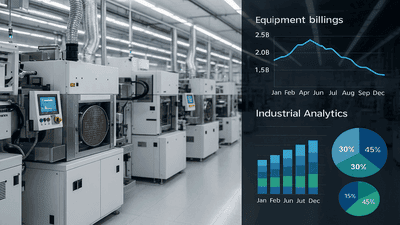
Leading Indicator: Interpreting North American Semi Equipment Billings
North American semiconductor equipment billings are one of the industry’s most watched data points. They capture how much chipmakers are actually spending on tools—lithography systems, etch and deposition equipment, inspection and metrology gear, and packaging machines—to build and upgrade fabs.