

Christopher Reed
I follow the global DRAM and NAND markets with an emphasis on supply discipline, production utilization, inventory levels, pricing, and end-market demand. My research focuses on understanding the cyclical behavior of memory markets and the factors that can cause conditions to change quickly. I write for this website because memory markets can shift significantly when manufacturers adjust production plans. Unlike many semiconductor segments, DRAM and NAND pricing can respond strongly to changes in inventory and supply. A relatively small imbalance between production and demand can therefore have a large effect on market conditions. My work monitors production utilization, wafer starts, inventory levels, contract pricing, spot pricing, capacity expansion, and demand from servers, PCs, smartphones, consumer electronics, and data centers. I also compare current conditions with previous memory cycles to identify similarities and differences. I research both DRAM and NAND because the two markets share some common manufacturing resources while serving different applications. Changes in investment priorities and product mix can therefore influence supply conditions across the broader memory industry. I also follow memory manufacturers and related investment themes. My objective is to provide readers with a structured framework for understanding memory cycles and explain how production decisions, inventories, pricing, and end-market demand interact to shape the semiconductor memory market.
DRAM and NAND cycle analyst focused on inventory, production utilization, pricing, supply discipline, capacity expansion, and global memory demand.
Christopher Reed is a semiconductor memory cycle researcher who follows global DRAM and NAND markets. His work focuses on the supply, inventory, pricing, and demand indicators that drive changes in memory market conditions.
Christopher monitors production utilization, wafer starts, inventory levels, contract pricing, spot pricing, capacity expansion, and demand from servers, PCs, smartphones, consumer electronics, and data centers. His research places these indicators within the broader semiconductor memory cycle.
Production discipline is an important part of Christopher's coverage. Memory manufacturers can adjust output and investment in response to changing market conditions, and these decisions can influence supply and pricing well before their full effects become visible in financial results.
He researches both DRAM and NAND markets while recognizing the differences between their applications, technology structures, and demand patterns. His work examines how manufacturers balance capacity and product mix across changing market conditions.
Through his contributions, Christopher provides readers with a cycle-oriented view of the global memory industry and explains how production, inventory, pricing, capacity, and demand interact across different phases of the market.
His Articles

More Threads and Biren’s GPU Iteration Race: China’s General-Purpose AI Compute Path
China’s domestic AI hardware effort is not following one architectural route. Some companies emphasize specialized neural processors. Others are pursuing programmable GPUs that can support a broader mix of training, inference, and general computing workloads.
Hong Kong vs. Mainland Semi ETF Flows: The Cross-Border Pattern
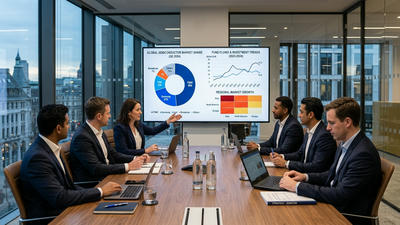
There's a pattern that repeats every quarter, every earnings season, every macro inflection point. When semiconductor sentiment turns positive, Hong Kong-listed semi ETFs see inflows first—often 2-3 days before mainland China ETFs. When sentiment sours, mainland ETFs see outflows first—again, 2-3 days ahead of Hong Kong. The lag isn't random. It reflects capital controls, investor composition, trading hours, and the unique mechanics of cross-border ETF access. For investors tracking semiconductor ETF flows in Asia, understanding this pattern is alpha.

Semi ETF AUM Growth: The Liquidity Premium Threshold
There's a number that every semiconductor ETF issuer watches: $1 billion. It's not a marketing milestone or a psychological round number. It's the liquidity premium threshold—the point at which an ETF's average daily volume (ADV) deepens enough to attract institutional capital, which in turn drives more AUM, which further deepens liquidity, creating a virtuous cycle. Below $1B, ETFs struggle with wide bid-ask spreads, limited institutional interest, and sluggish asset growth.

The Liquidity Siphon Effect of Growing Semi ETF AUM on Constituent Passive Inflows
Semiconductor themed ETFs have moved from niche products to major pipelines for capital into the chip ecosystem. As their assets under management (AUM) grow, the way liquidity reaches individual semiconductor stocks is changing. More money is flowing through the ETF wrapper and less directly into single names, especially from passive and quasi‑passive investors. This shift raises an important question: is there a “liquidity siphon effect,” where growing semi ETF AUM channels more passive inflows into the ETF itself and away from direct constituent ownership?
A Methodology for a Dedicated Memory Chip Index (Focusing on ASP and Bit Growth Dual Factors)
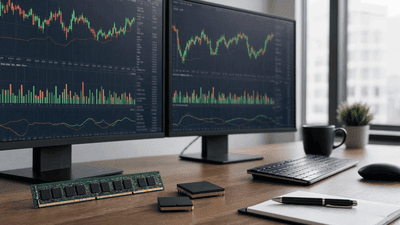
AI storage and computing power increasingly depend on one core ingredient: memory. DRAM, NAND, and especially HBM are no longer just cyclical commodities; they are central to the performance and economics of AI data centers. Yet most semiconductor indices still treat memory as one subsector among many, and most AI hardware indices mix memory exposure with compute and equipment in ways that can blur the underlying drivers. If you want a clean instrument for memory risk and opportunity, you need a dedicated memory chip index built around the actual economics of the business—above all, average selling prices (ASP) and bit growth.

The Bundled Investment Thesis of HBM and CoWoS: Indispensable Pair
In modern high-performance computing and AI system design, High-Bandwidth Memory (HBM) and Chip-on-Wafer-on-Substrate (CoWoS) packaging have evolved from complementary technologies into a tightly coupled investment thesis. This post examines why investors, system architects, and policymakers should view HBM and CoWoS as an intertwined opportunity—how technological synergies, supply-chain economics, customer demand patterns, and geopolitical dynamics create a single strategic story rather than two separate bets.