

Christopher Morgan
I research semiconductor indices and the methodologies used to measure the performance of the global chip industry. My work covers index construction, constituent selection, sector classification, weighting methods, rebalancing, and the relationship between semiconductor indices and the underlying industry cycle. I publish on this website because semiconductor indices provide a useful way to observe broad industry trends without focusing on a single company. However, differences in index methodology can produce very different exposures to memory, foundries, equipment, AI chips, and other semiconductor segments. My research compares major global semiconductor benchmarks and examines their composition, concentration, sector exposure, and historical performance. I also study how index changes affect the representation of different semiconductor industries. Another important part of my work is understanding index rebalancing. Changes in constituent companies and weights can alter an index's exposure even when the underlying semiconductor industry remains unchanged. Through my articles, I aim to help readers understand how semiconductor indices are constructed and how index composition, industry cycles, and market performance interact.
Semiconductor index analyst covering index construction, constituent selection, weighting, rebalancing, sector exposure, and global semiconductor benchmarks.
Christopher Morgan is a semiconductor index researcher specializing in global industry benchmarks and index methodology. His work examines how semiconductor companies are selected, classified, weighted, and represented in major market indices.
Christopher compares semiconductor benchmarks across regions and methodologies. His research considers exposure to memory, foundries, equipment, AI chips, and other semiconductor segments, as well as differences in concentration and constituent weighting.
Index rebalancing is another important area of his coverage. Changes in constituents or weights can alter an index's exposure to different parts of the semiconductor industry and may affect how investors interpret benchmark performance.
Through his articles, Christopher provides readers with a structured view of semiconductor indices and explains how index methodology, sector composition, market cycles, and industry performance are connected.
His Articles
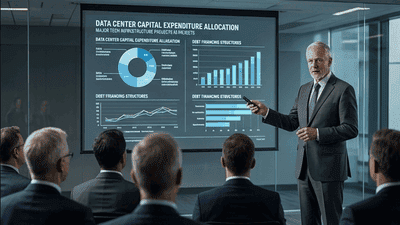
AI Capex Debt Financing: The Rate Sensitivity of Hyperscaler Spending
The rapid expansion of artificial intelligence infrastructure has transformed capital expenditure into one of the most important macro-financial stories in the technology sector. Hyperscale cloud providers and large technology companies are committing enormous amounts of capital to data centers, accelerators, networking equipment, power infrastructure, cooling systems, and advanced storage. While much of this investment is supported by strong operating cash flow, the scale and speed of AI infrastructure spending have increasingly brought debt financing and interest-rate sensitivity into the discussion.

R&D Intensity Ranking in Semis: Who Keeps Doubling Down on the Future?
In semiconductors, research and development is not just a line item—it is the engine that determines who sets the pace of technology and who follows. R&D intensity, usually measured as R&D spending as a percentage of revenue, reveals how aggressively companies are investing in their future versus harvesting their present.

An Event-Driven Rotation Calendar for Memory Thematic ETFs in 2H 2026
If 2025 was the year investors “discovered” memory as the hidden backbone of AI, then 2026 is the year that discovery turned into a full-blown rotation. Capital has been shifting from GPU-only stories into the broader AI storage and computing power stack, with memory chip ETFs quietly delivering triple-digit returns and outpacing headline semiconductor benchmarks. Against that backdrop, thinking about a second-half rotation calendar for “memory theoretical ETFs” is not just a thought experiment — it is a way to structure how you move through the cycle as key events arrive.