

Andrew Wilson
My research focuses on Asian and international semiconductor indices, with particular attention to Taiwan, South Korea, Japan, and other major semiconductor manufacturing regions. I study regional index composition, industry exposure, market structure, and differences between local and global semiconductor benchmarks. I write for this website because Asia represents a significant part of global semiconductor manufacturing and memory production. Regional semiconductor indices can therefore provide information that is not always visible through U.S.-focused benchmarks. My research compares regional semiconductor indices and examines their exposure to foundries, memory manufacturers, equipment suppliers, materials companies, and chip designers. I also follow how local market structures influence index composition. Another part of my work is studying regional industry cycles. Changes in memory pricing, foundry utilization, equipment spending, and technology investment can have different effects across Asian semiconductor markets. Through my articles, I aim to provide a global perspective on semiconductor indices and explain how regional market structures influence benchmark performance.
Global semiconductor index analyst focused on Asian benchmarks, Taiwan, Korea, Japan, regional composition, manufacturing exposure, and industry cycles.
Andrew Wilson is a global semiconductor index researcher with a particular focus on Asian semiconductor markets. His coverage includes benchmarks associated with Taiwan, South Korea, Japan, and other important semiconductor regions.
Andrew examines the representation of foundries, memory manufacturers, equipment suppliers, materials companies, and chip designers within regional indices. He compares these structures with broader global semiconductor benchmarks.
Regional industry cycles are an important part of his research. Memory pricing, foundry utilization, equipment investment, and technology transitions can affect Asian semiconductor markets differently depending on local industry composition.
Through his articles, Andrew provides readers with a regional perspective on semiconductor indices and explains how Asian manufacturing structures and market cycles influence benchmark composition and performance.
His Articles

Custom HBM+CoWoS Portfolio: The DIY Index Construction
Thematic ETFs are convenient, but they're also blunt instruments. An AI infrastructure ETF might give you exposure to HBM (high-bandwidth memory) and CoPoS (co-packaged optics) leaders, but it'll also dump you into NVIDIA, Broadcom, and a dozen other names that dilute the pure play.

Inferring Institutional Views on Memory via Quarterly Holdings Changes in AI Infrastructure ETFs
What do big institutions really think about the future of memory, storage, and compute in artificial intelligence? They rarely tell you directly. Instead, they speak through their portfolios, their rebalancing moves, their quiet shifts in exposure every quarter. One of the most revealing places to listen is in the holdings of AI infrastructure exchange-traded funds (ETFs), especially the way those holdings evolve over time.

Competitive Landscape of AI Chip IP Licensing Models (ARM/RISC-V)
As AI chips move from niche accelerators to pervasive compute foundations in data centers, edge devices, and embedded systems, the way CPU and AI cores are licensed has become a strategic question rather than a mere technical detail. ARM’s established commercial IP licensing model and the rising ecosystem around RISC-V represent two contrasting philosophies: one offers mature, standardized cores under proprietary licenses;
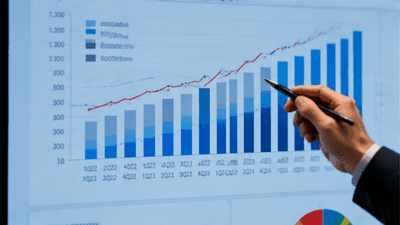
2026 HBM Supply-Demand Gap Forecast: How Much Shortfall Remains?
High‑Bandwidth Memory (HBM) is now a critical component across AI training clusters, inference accelerators, and high‑performance computing systems. As demand surged between 2022 and 2026, suppliers scrambled to expand wafer capacity, interposer production, advanced packaging, and specialized test and burn‑in capacity. Yet multiple bottlenecks—packaging throughput, materials, tooling lead times, and yield learning—left the market short of fully meeting demand.

IPO Heat in the Semi Sector as a Contrarian Sentiment Indicator – Historical Validation
In every cycle, there comes a moment when semiconductor stories feel effortless. Order books are full, AI headlines are everywhere, valuations stretch, and suddenly a cluster of semi-related companies decides it is the perfect time to go public. That moment—call it “IPO heat”—is often treated as a sign of strength. Historically, it has also been a subtle warning flag: when the semi IPO market gets too hot, future returns in the sector often cool.