

Andrew Mitchell
I follow the global HBM market with particular attention to production capacity, customer qualification, technology transitions, supply-demand conditions, and the growing demand created by AI computing. My research examines the relationship between memory manufacturers, accelerator customers, packaging providers, and the broader data-center semiconductor supply chain. I write for this website because HBM has developed into one of the most closely watched segments of the memory industry. Demand can change rapidly as AI accelerator deployments increase, but supply cannot always respond at the same speed because HBM requires specialized production, advanced packaging, testing, and qualification. Understanding this difference is an important part of my work. My research follows HBM capacity expansion, production schedules, customer qualification, memory output, packaging availability, and demand from major AI computing platforms. I also examine how different HBM generations influence production requirements and the amount of manufacturing capacity needed to support future accelerator shipments. I pay particular attention to the relationship between HBM supply and the broader DRAM market. HBM production consumes advanced memory manufacturing resources, while manufacturers must balance investment between HBM and other DRAM products. These decisions can influence the overall memory supply environment. I also monitor HBM-related investment themes and industry developments. My goal is to provide readers with a clear understanding of the market forces behind HBM supply, demand, pricing, capacity expansion, and customer adoption rather than focusing only on headline production announcements.
HBM market analyst focused on production capacity, customer qualification, supply-demand conditions, AI accelerator demand, and the global memory manufacturing cycle.
Andrew Mitchell is an HBM market research analyst who focuses on the supply, demand, and manufacturing conditions shaping the global high-bandwidth memory market. His work on this website examines HBM from both market and industry perspectives.
Andrew closely follows HBM production capacity, customer qualification, manufacturing schedules, technology transitions, packaging availability, and demand from AI accelerator platforms. His research considers how quickly supply can expand compared with the rapid growth of AI-related memory requirements.
He also examines the relationship between HBM and the broader DRAM market. HBM production uses advanced memory manufacturing resources, creating important decisions for manufacturers as they balance HBM capacity with conventional DRAM demand.
Andrew's coverage follows the development of different HBM generations and the manufacturing requirements associated with each technology transition. He also studies how customer qualification and packaging capacity influence the timing of commercial production.
Through his articles, Andrew provides readers with a market-oriented view of HBM supply and demand and explains the manufacturing and industry factors behind changes in the rapidly expanding AI memory market.
His Articles
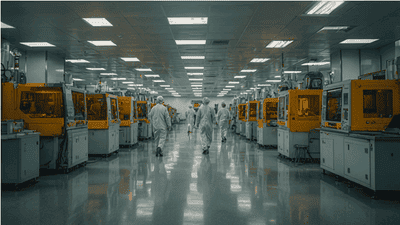
OpenAI’s $73B Valuation and TSMC Self-Designed Chip: A New AI Vertical Integration Era
OpenAI’s move into custom silicon signals a new phase of AI integration: model developers increasingly want influence over the hardware that determines their costs, capacity, and product performance. But this is integration through partnerships, not a plan to own every layer of semiconductor manufacturing.
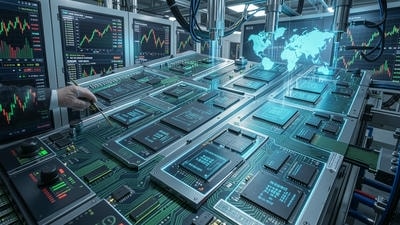
Investment Implications of the World’s First HBM Thematic ETF Listing in Korea
By 2027, the semiconductor ETF industry will be less about “chips” in the abstract and more about the specific machinery behind AI: storage and computing power. The capital markets are already shifting in that direction, carving out ETFs and index derivatives that track not only general semiconductors, but the precise hardware bottlenecks for AI workloads—HBM memory stacks, accelerator compute, advanced interconnects, and cooling infrastructure. The result will be a landscape where product innovation and investor behavior evolve together, reshaping what it means to invest in “semis.”